
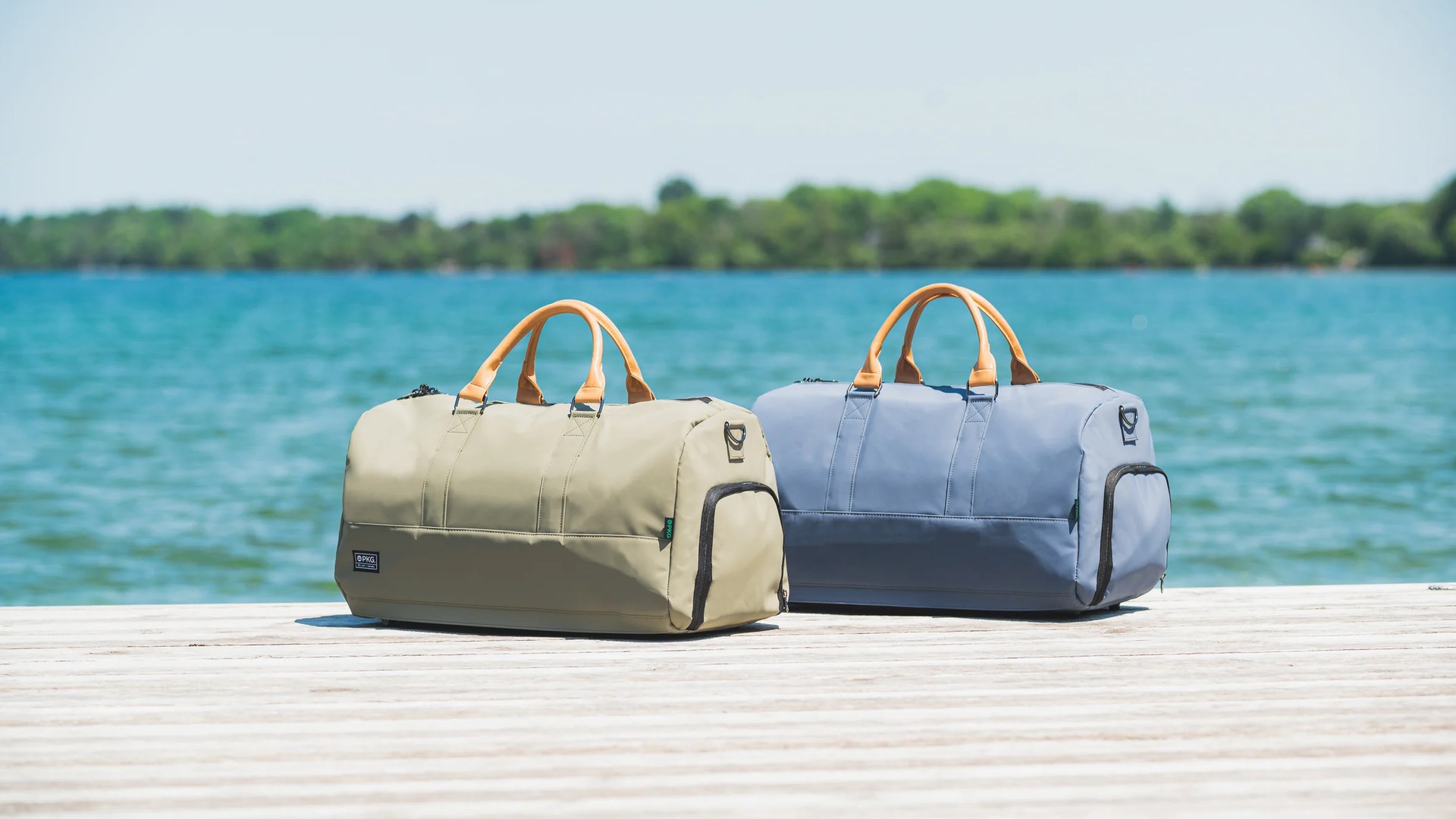
PKG spent 24 months testing fabric before it changed anything. In 2022, the PKG Carry Goods bag line switched every year-round product, inside and out, to fabric made from recycled post-consumer water bottles, without changing the look, feel, or durability testing the bags already had.
What makes PKG’s fabric different
Every PKG bag starts with the same material decision. After 24 months of testing, the company moved its entire year-round collection onto recycled post-consumer water bottle fabric in 2022, for both the interior lining and the exterior shell. The exterior uses PKG’s eco chain material, a fully recycled 400D RPET dobby fabric finished with a durable water repellent coating that beads off light rain and snow. Weather-resistant, not waterproof, is how PKG describes it.
PKG says the switch did not cost the bags anything in build quality: same look, same feel, same durability testing, and the same water pressure testing as the fabric it replaced. Every bag is lined with a striped interior fabric spun from the same recycled yarn, seams run 7 to 8 stitches per inch, hardware is metal rather than plastic, and the accent trims use a vegan leather PKG puts through hydrolysis testing for longevity. Recycled, in other words, was built to match the standard PKG already held itself to.
The impact built into every bag
The fabric shift covers every bag PKG sells, not a limited eco line alongside the regular one. Both the eco chain exterior and the interior lining are spun from 100 percent recycled post-consumer water bottles, so a laptop sleeve and a checked duffel draw from the same recycled yarn. PKG designs, sells, and markets every product from its Markham, Ontario head office, then manufactures overseas at factories the company says it audits directly for quality control and for compliance with global ethical and humanitarian standards.
The metal hardware and vegan leather trim go through what PKG describes as third-party durability testing, on top of the water pressure and weather testing every design goes through before it ships. None of PKG’s materials carry an outside sustainability certification as of mid-2026. What the company can point to instead is scope: every year-round bag, not a limited run, moved to recycled yarn in 2022, and stayed there.
The company behind it
PKG Carry Goods is a family run business that brothers Andy and Mike Priestman founded in Markham, Ontario, in 2009. The pair still run product development out of that head office, designing every bag internally before manufacturing moves overseas. The work-life design brief, built for a Monday through Sunday routine rather than a single use case, predates the 2022 fabric change by more than a decade, which is part of why the switch reads as a materials update rather than a relaunch. PKG bags are sold in more than 35 countries as of mid-2026, with Canadian retail distribution that includes Harry Rosen.
Where it fits in corporate gifting
A recycled-fabric duffel or backpack works anywhere a company wants the bag to survive actual travel, not just a desk. PKG’s corporate program runs from 20 bags up to 2,000, with embroidery and heat-press branding available on request, which covers a single department off-site as easily as a company-wide holiday order. Sales teams and account managers who live out of a bag several days a week get real use from a well-made duffel, and the same fabric standard that runs through PKG’s whole catalogue means a branded onboarding backpack and a leadership travel bag are built the same way. Field kits, conference bags, and new-hire onboarding are the occasions PKG’s own program is built to serve.
Making it yours
PKG offers embroidery and heat-press branding on its bags for corporate orders, arranged through its sales team once a company confirms quantity and bag style. The company does not publish a standard price list or minimum order value for custom work, so logo placement, thread colour, and turnaround time need a direct conversation before they are confirmed. What is published is the range: 20 bags at the small end, 2,000 at the large end, which gives a buyer a starting point for that conversation.
Frequently asked questions
Are PKG bags made in Canada?
PKG designs, sells, and markets every bag from its head office in Markham, Ontario, and the company is upfront that manufacturing happens at contracted factories overseas.
PKG says it runs its own quality control and factory audits at those sites to ensure compliance with global ethical and humanitarian standards.
What is PKG’s recycled fabric made from?
Since 2022, PKG’s entire year-round bag line has used fabric made from recycled post-consumer water bottles for both the interior lining and the exterior shell, including the eco chain 400D RPET exterior material.
PKG says the recycled fabric performs the same as the non-recycled material it replaced, with the same durability and water pressure testing.
Can we add our company logo?
Yes. PKG offers embroidery and heat-press branding for corporate orders, arranged directly with its sales team once quantity and bag style are confirmed.
Both applications are available across PKG’s bag range, from totes to duffels.
What order quantities does PKG work with?
PKG’s corporate program is built for orders from 20 bags up to 2,000, covering everything from a single-department gift to a company-wide rollout.
Pricing and lead times for a specific quantity are handled directly with PKG’s sales team.
PKG built its brand on one plain idea: a bag that works every day of the week shouldn’t force a buyer to choose between design and material. The 2022 fabric switch didn’t change that promise. It changed what the bag is made from.
Ready when you are
Together, we create the effect.
Want PKG in your next gifting project? Tell a Butterfly specialist what you are planning and we will bring the makers, the ideas, and the impact report.