
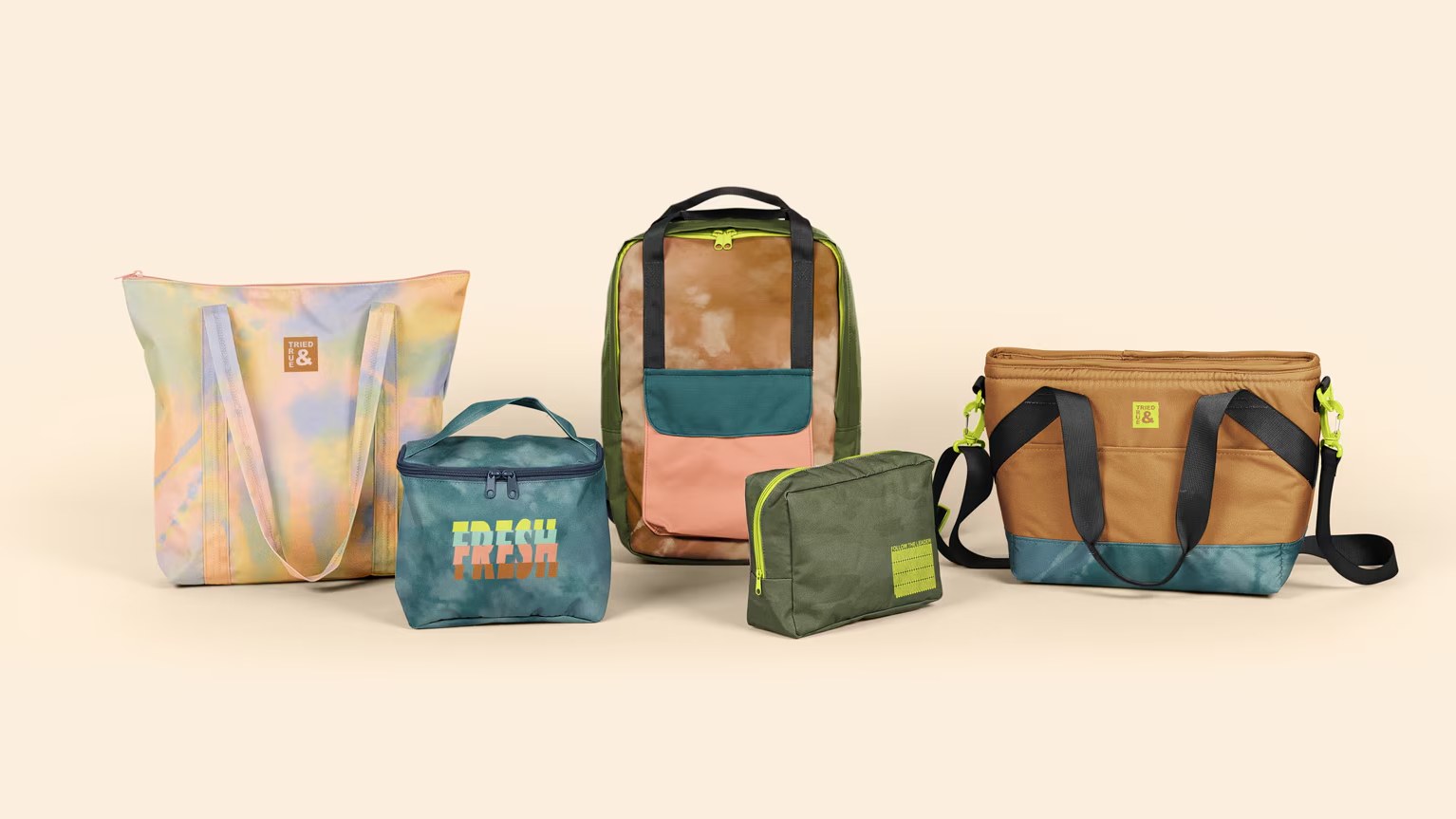
A tote bag coming off a Numo production table might have been a ten foot by eight foot vinyl billboard three weeks earlier. The Texas manufacturer’s upcycling program cuts up retired signage, event banners, and misprinted apparel and sews the material into totes, duffels, backpacks, and pouches instead of sending it to a landfill. Corporate buyers building sustainability forward gifting programs get a bag with a traceable material story, not a generic catalog item.
What makes Numo’s upcycled bags different
Numo runs a client-supplied upcycling program alongside its standard promotional product lines. A client sends back retired vinyl banners, trade show billboards, event tablecloths, or misprinted apparel instead of throwing them out, and Numo’s Texas team takes it from there. National Sales Manager Jim Martin has described the process as a step-by-step one: the team calculates how much usable material a piece of signage or clothing will yield, cleans and preps it, then cuts and sews it into new shapes.
The finished shapes follow Numo’s regular product catalog: totes, duffels, backpacks, and zip pouches sized the same as items made from new material. A parallel remnant materials line uses the fabric cut-offs from Numo’s own mainline production runs for smaller items like notepads and key rings, so the habit of reusing material extends past the flagship upcycling program.
The impact built into every bag
After Toronto based commonsku’s 2024 SKUCON conference wrapped, the 48 tablecloths used at the event were shipped to Numo instead of being thrown out. Numo’s team cut and sewed each tablecloth into pouches, which were handed out to every attendee at the following SKUCON. commonsku’s president and chief brand officer, Mark Graham, said the goal was to show distributors “the most creative ways to use promo” and get the industry thinking about a product’s life cycle past the event floor.
Numo has run the same process on other retired event material, including a Restore Our Earth climate action billboard that became a run of commuter bags, totes, and pouches instead of scrap. Martin summed up the reasoning to PPAI Media: “Extending any promotional product’s life (either in its initial form or in its new upcycled form) is a huge win not only for the environment, but also for the advertiser. The cost per impression of something in the garbage is infinite.”
The company behind it
Numo started in Dallas, Texas, in 1962 as the Numismatic Manufacturing Company, selling wooden nickels and other bank supply novelties, which is where the shortened name comes from. The wooden nickel line phased out over the following decades as the company expanded into insulators, bags, and drinkware. Kolder Incorporated, a South Texas beverage insulator manufacturer founded in 1982, purchased Numo in 2007 and now sells its promotional product line under the Numo name. Numo operates today from Kaufman, Texas, cutting and sewing goods in house rather than through outside brokers.
Where it fits in corporate gifting
The upcycling program suits any buyer whose events already generate retired banners, booth graphics, or tablecloths: association conferences, trade show booths, and multi-day summits are natural candidates. A leftover event billboard or backdrop can come back as staff totes or client thank you bags instead of storage unit clutter. Numo’s standard lines, cooler bags, backpacks, pouches, and drinkware, work for onboarding kits and holiday boxes for a buyer who wants a Texas manufactured option with a documented material story even without a retired banner to send in.
Making it yours
Numo decorates its standard lines with spot color and four color process printing, and its own site organizes products by material and decoration method for browsing. The upcycling program works a little differently: a buyer or their event supplier sends the retired material to Numo first, and the team quotes yield and turnaround once they can see what they are working with. Minimum quantities and lead times for a custom upcycling run are not published, so loop in a Butterfly specialist early if a project depends on your own retired signage.
Frequently asked questions
Is Numo a US or Canadian company?
Numo is a US company, founded in Dallas, Texas, in 1962 and now based in Kaufman, Texas. It has been owned by Kolder Incorporated, a South Texas manufacturer, since 2007.
Can we send our own retired banners or signage to become bags?
That is the basis of Numo’s upcycling program. Clients supply material such as retired vinyl billboards, event tablecloths, or misprinted apparel, and Numo’s team calculates yield and sews it into totes, duffels, backpacks, or pouches, the way commonsku turned 48 SKUCON tablecloths into attendee pouches.
What quantities work for an upcycled order?
Numo has not published fixed minimums for upcycling projects, since the yield depends on how much usable material a client supplies. A Butterfly specialist can bring your quantity and timeline to Numo for a real quote.
Is the upcycling program independently certified?
No independent certification is published for the program. It is a self-described initiative that Numo and its partners, including PPAI Media and commonsku, have documented case by case.
Numo’s bags carry a specific, checkable history: this billboard, that tablecloth, this misprinted run. A buyer who wants proof behind a sustainability claim gets it built into the product itself.
Ready when you are
Together, we create the effect.
Want Numo in your next gifting project? Tell a Butterfly specialist what you are planning and we will bring the makers, the ideas, and the impact report.